


 Interview with Carole Bernard (CIE.NC)
Paris and Nouméa, October 25, 2026. In the midst of COP17 on biodiversity in Yerevan (Armenia), the eyes of the world are fixed on the urgency of protecting living ecosystems. Among the top priorities set by the United Nations: the need to bridge the gap between global goals and citizen action, and the essential recognition of indigenous and local knowledge. How do we translate these major international treaties on the ground, on territories facing climate emergencies every day? To understand this, we spoke with Carole Bernard, Director of the Environmental Initiation Center of New Caledonia (CIE.NC). Since 1996, this association has been the key reference actor for environmental education in the archipelago.
A key partner in the European project WeSea, an unprecedented cross-regional experiment coordinated by HORBE consulting that connects the Mediterranean and the Pacific, CIE.NC works to ensure that knowledge of biodiversity becomes a real lever for action for all communities, especially the most isolated ones. Carole Bernard shares her vision here of an environmental education that is participatory, inclusive, and deeply rooted in respect for cultures.
We are in the middle of COP17 on biodiversity: what is the visible impact of the erosion of nature on your lagoons and forests? How does the sense of urgency manifest among your teams?
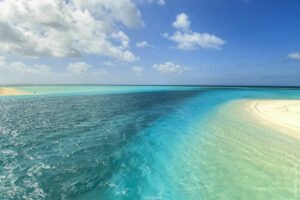
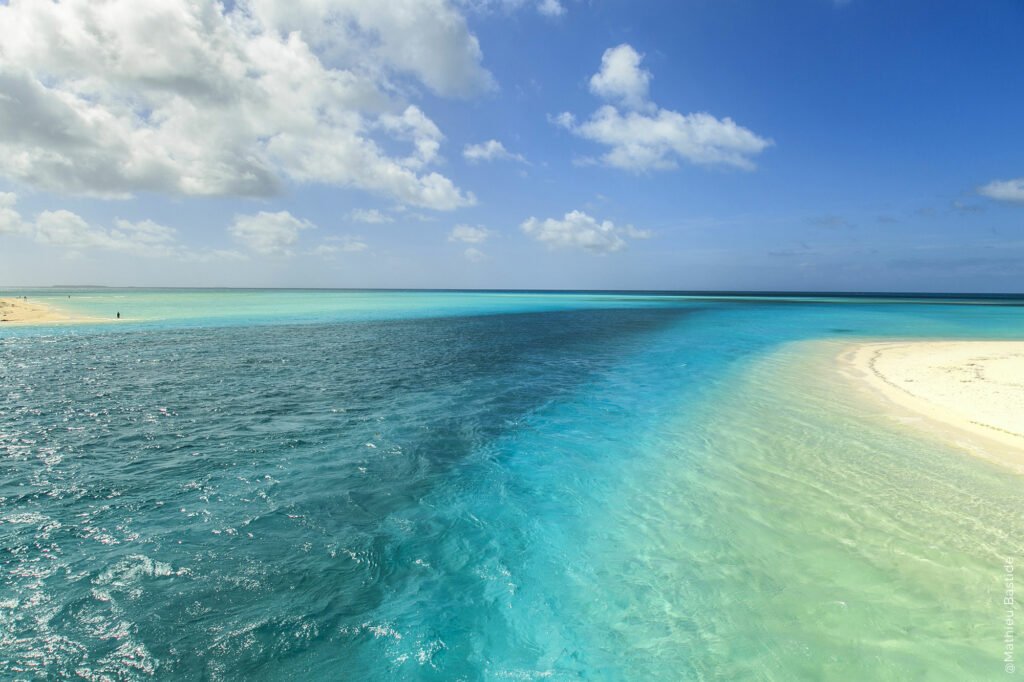
Carole Bernard : In New Caledonia, we are fortunate to live at the heart of an exceptional natural heritage. But this richness is fragile, subject to intense and immediate pressures. Our ecosystems suffer direct harm: devastating forest fires, occurring more and more frequently, which destroy our unique terrestrial biodiversity, but also the impact of human activities on mangroves and coral reefs. Added to this is climate change, which is already causing coral bleaching and threatening the survival of our lagoons listed as a UNESCO World Heritage site. These consequences, sometimes invisible to the layperson, represent an accelerated degradation that requires immediate action. That is what makes our educational work indispensable.
At CIE.NC, our teams know that every educational activity is an opportunity to change perspectives and behaviors. When we accompany children or adults on a reef flat, in a mangrove, or near habitats of sea turtles, dugongs, and marine mammals, we aim to help them understand that each environment plays an essential role and that the species living there are interdependent. For us, urgency translates into the need to scale up our outreach and adapt it to field realities. We don’t just want to raise awareness about the fragility of our biodiversity: we want to provide the tools to understand it and act to protect it. It is a collective responsibility, but also a mission that drives us every day.
How do you explain that on an island surrounded by the world’s largest lagoon, residents can feel disconnected or helpless when faced with marine issues?
C. B. : Living near the lagoon does not necessarily mean knowing it or understanding how it functions. In New Caledonia, there are people who have never been to the sea. One can live alongside the ocean daily without knowing what happens on a reef flat, what role mangroves play, or why preserving seagrass beds is important for species like the dugong. This is precisely why we offer educational activities and field trips. During a reef flat excursion, for example, participants can directly observe the diversity of organisms, understand their adaptations, and discover the links connecting different species to their environment. I think the feeling of helplessness sometimes comes from environmental issues seeming too vast or complex. Our role is to make these challenges accessible and show that everyone can start taking action at their own scale. We want New Caledonians to get to know their environment better, develop a connection with it, and realize that they have a role to play in its preservation.
What concrete geographic, social, or cultural obstacles do you face when bringing environmental education to isolated tribes on Grande Terre?
C. B. : New Caledonia is a territory with very diverse geographic, social, and cultural realities. Working in tribal communities requires time, logistical resources, and respect for local customs. It is essential to perform the traditional greeting (“faire la coutume”) and meet with tribal authorities before any activity, in order to establish trust and adapt our sessions to local realities. One of our greatest challenges is reaching the most remote populations, particularly inland communities in mountainous areas who may have never seen the ocean. The lack of funding and recognition granted to non-profits is also a major obstacle, sometimes limiting our capacity to reach all these remote communities.
Beyond these constraints, our priority remains providing adapted, concrete, and accessible activities. Whether covering mangroves, coral reefs, or marine biodiversity, we aim to bridge scientific knowledge with local realities through observation, games, and experimentation. I am particularly attached to the dedication of our teams, whose active listening, adaptability, and local knowledge are essential for delivering environmental education that respects territories and their inhabitants.
COP17 highlights the recognition of indigenous and local community knowledge as a priority: how does this resonate with CIE.NC’s approach?
C. B. : In New Caledonia, connections to land and sea are deeply tied to history, local practices, and intergenerational transmission. At CIE.NC, we value this richness and integrate traditional knowledge, mythology, and indigenous cultural perspectives into our activities whenever possible. We cover traditional plant uses; for example, during mangrove sessions, we mention how mangrove trees are used for natural dyes. We also highlight connections between natural cycles and cultural practices: in southern New Caledonia, the arrival of whales is traditionally associated with the yam harvest season. This knowledge complements scientific insights and helps people better understand the bonds between human populations and their ecosystem.
We are also interested in traditional conservation techniques and nature-based solutions that can inform our broader reflections on biodiversity protection. Our approach is centered on fostering a dialogue between scientific knowledge and local wisdom, building as much as possible on what participants already know: the species they see, the environments they visit, and the practices passed down within their community. This requires listening, respect, and careful attention to cultural contexts. For us, environmental education must be rooted in New Caledonia’s territories, honoring local knowledge and supporting its transmission so that everyone can help understand and preserve living nature.
CIE.NC’s activities rely heavily on physical immersion, interactive games, eco-pedagogical trails, and participatory science. Do you find this approach effective in sparking commitment?
C. B. : Absolutely! Because learning about the environment happens through sight, touch, the senses, and lived experience. To understand an ecosystem, observing it firsthand is often much more meaningful than looking at photos or listening to explanations in a classroom. It is far more concrete and impactful! Our reef flat excursions perfectly illustrate this approach. Participants observe the diversity of marine organisms, identify their features, and see how living beings share the same habitat. The educator guides this discovery, helping them ask questions and connect their observations.
We also use educational materials and games to explore topics like sea turtles, coral reefs, dugongs, and marine mammals. These tools make concepts accessible and allow participants to learn while staying actively engaged. They build knowledge playfully, which leads to better long-term retention. Participatory science takes this a step further by offering opportunities to collect data that improves scientific understanding of biodiversity. It demonstrates that observing nature can contribute to real science, allowing everyone to participate while deepening their own knowledge. For me, the key is placing participants at the center of their learning journey. We are not just there to deliver information, but to create the right conditions for people to understand, ask questions, and take ownership of knowledge. That is why our educators’ work is so crucial: they turn scientific content into an accessible, engaging, and meaningful experience. That experience is what inspires curiosity and a desire to protect natural environments.
En quoi le projet WeSea peut-il concrètement faire monter en compétences vos animateurs de terrain ? Qu’attendez-vous de la coopération avec la Méditerranée ?
C. B. : I am deeply committed to WeSea because it aligns with our goal to continuously refine our pedagogical methods and enhance our teams’ skills. At CIE.NC, we cover many marine environment topics, requiring us to share reliable scientific information while tailoring our teaching approach to different age groups, backgrounds, and expectations. That is the main challenge of our profession. An educator cannot just know the subject matter. They must capture attention, encourage participation, adapt their language, address questions, and spark further interest. WeSea allows us to focus on this pedagogical aspect, step back, and explore new ways to teach marine biodiversity education. Working alongside HORBE consulting, Fundación CRAM in Spain, and Deniz Yaşamını Koruma Derneği in Turkey is a wonderful opportunity. We share common concerns about marine preservation while operating in distinct environmental, cultural, and educational contexts. These exchanges allow us to compare experiences, learn methods used elsewhere, and identify common ground to build adaptable tools usable globally with simple local adjustments.
I hope our educators gain practical tools, new skills, and greater confidence in their teaching methods through this project. I want this cooperation to directly enhance the activities we deliver to the people of New Caledonia. It is also a way to highlight our teams’ expertise. We have built strong field experience and deep knowledge of New Caledonia’s ecosystems that can enrich our European partners as well. Cooperation should be a two-way street: we have as much to learn as we have to share. For me, WeSea is far more than an exchange of best practices. It is a collective effort to grow, strengthen partner ties, and tangibly improve our environmental education initiatives.
What changes do you hope to inspire among families and local communities through WeSea? Does CIE.NC plan to maintain this momentum after the project ends?
C. B. : I would like families and communities in New Caledonia to become more aware that everyone can contribute to preserving marine biodiversity in their own way. This starts with a better understanding of our environment, its richness, and its fragility. The better we understand surrounding ecosystems, the better equipped we are to adopt respectful habits and pass those values on to others. I want to encourage families and young people living inland to participate in our field trips and activities offered through this project. Our goal is to empower them to become ambassadors who pass this knowledge along within their own communities. Regarding WeSea, I want the outcomes to endure long after the project concludes. We must share these resources and learnings with other stakeholders in environmental education. The goal is ensuring skills built throughout the project benefit the broader community beyond those directly involved. At CIE.NC, our mission is empowering New Caledonians to know their environment better so they can protect it better. WeSea gives us another great opportunity to reinforce that mission, evolve our practices, and leverage cooperation to protect marine biodiversity.